








Weaving Sound:Echoes in the Absence
2025.07.06-2025.10.26
Artist
林天苗 Tianmiao Lin
苏珊·菲利普斯 Susan Philipsz
林天苗 Tianmiao Lin
苏珊·菲利普斯 Susan Philipsz
Organizer
Yi Museum
Yi Museum
Curator
Regines Lou;Hanchen Tao
Regines Lou;Hanchen Tao
Address
Yi Museum,Warehouse No2Xiaohe Park,Gongshu District,Hangzhou
Yi Museum,Warehouse No2Xiaohe Park,Gongshu District,Hangzhou
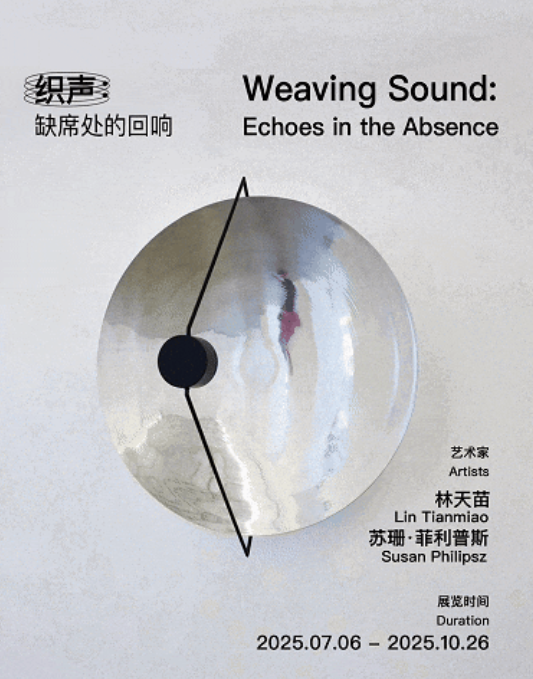
The inaugural exhibition “Weaving Sound:Echoes in the Absence”brings together artists Lin Tianmiao and Susan Philipsz. These two female artists employ thread and sound as mediums to respond to the voids and absences within space, awakening whispers and reverberations deep within human memory through the dual pathways of materiality and sensory experience.
Artist Lin Tianmiao studied at the Fine Arts Department of Capital Normal University in her early years, and in 1984 went to New York's School of Visual Arts for advanced study, experiencing firsthand the wave of feminist art in the United States in the late 1980s. During her time in America, Lin worked for eight years as a fabric designer, immersing herself completely in a rich artistic atmosphere and frequently visiting art exhibitions to accumulate creative energy. It was not until 1995, when she returned to China with her husband Wang Gongxin, that she began her artistic career.
After returning to China with her husband in 1995, Lin Tianmiao started her artistic practice. However, having just given birth, the heavy burden of domestic work placed enormous psychological pressure on her. She transformed her life experiences into installation artworks, expressing the emotions generated through her daily existence. Her renowned work “The Spreading of Winding”—featuring a hollowed-out mattress into which she inserted 20,000 large needles, each connected by white cotton thread to white cotton balls—exemplifies this approach. A monitor placed within the pillow repeatedly plays footage of her hands working continuously. The work was inspired by the artist's childhood memories of helping her mother wind yarn. She selects the most inconspicuous, ordinary materials from daily life, internalizing repetitive labor into an instinctive, direct form of expression.
The winding and weaving series established Lin Tianmiao's characteristic approach of creating work from a personal perspective that reflects upon life experiences through emotional expression. Subsequently, the thematic focus of emotion in her various series has continued to deepen around her personal life experiences. As Lin's life circumstances evolved, the emotional expression in her installation works developed further. Particularly during the period when her husband was hospitalized, Lin Tianmiao, as a wife, shouldered the responsibilities of their family, bearing immense psychological pressure. During this time, her installations no longer emphasized women's domestic activities, nor even gender itself. The materials she employed expanded beyond cotton thread and white cloth to include colorful embroidery, wool carpets, and eventually metal materials, hair, and fibers.
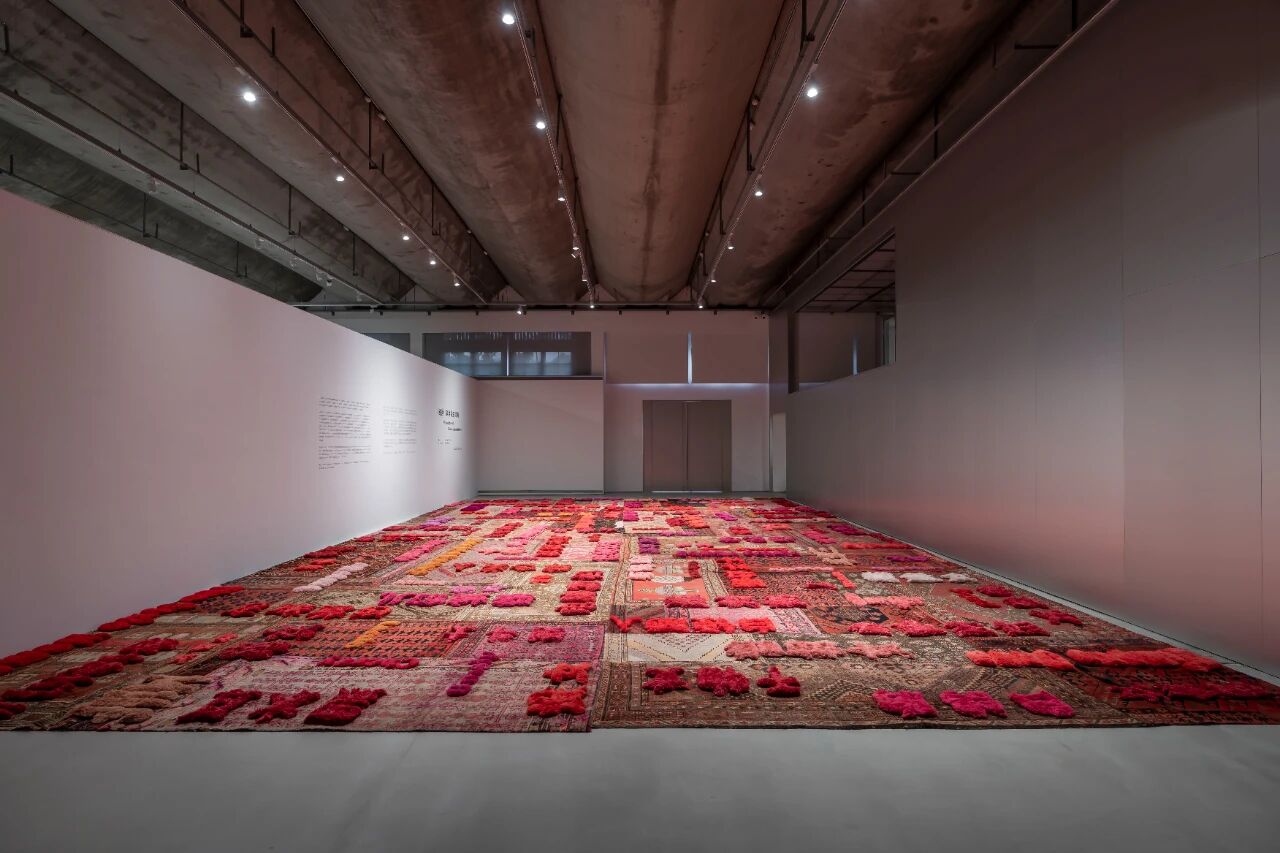
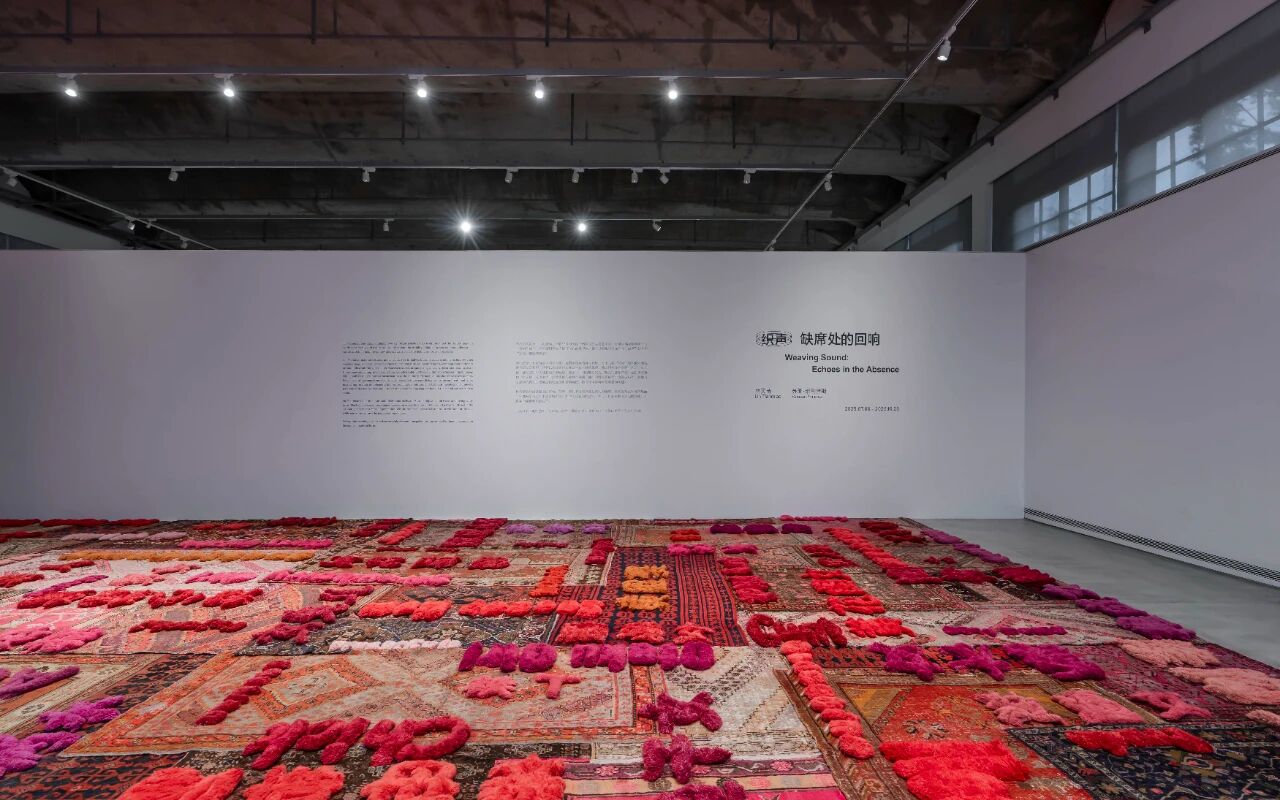
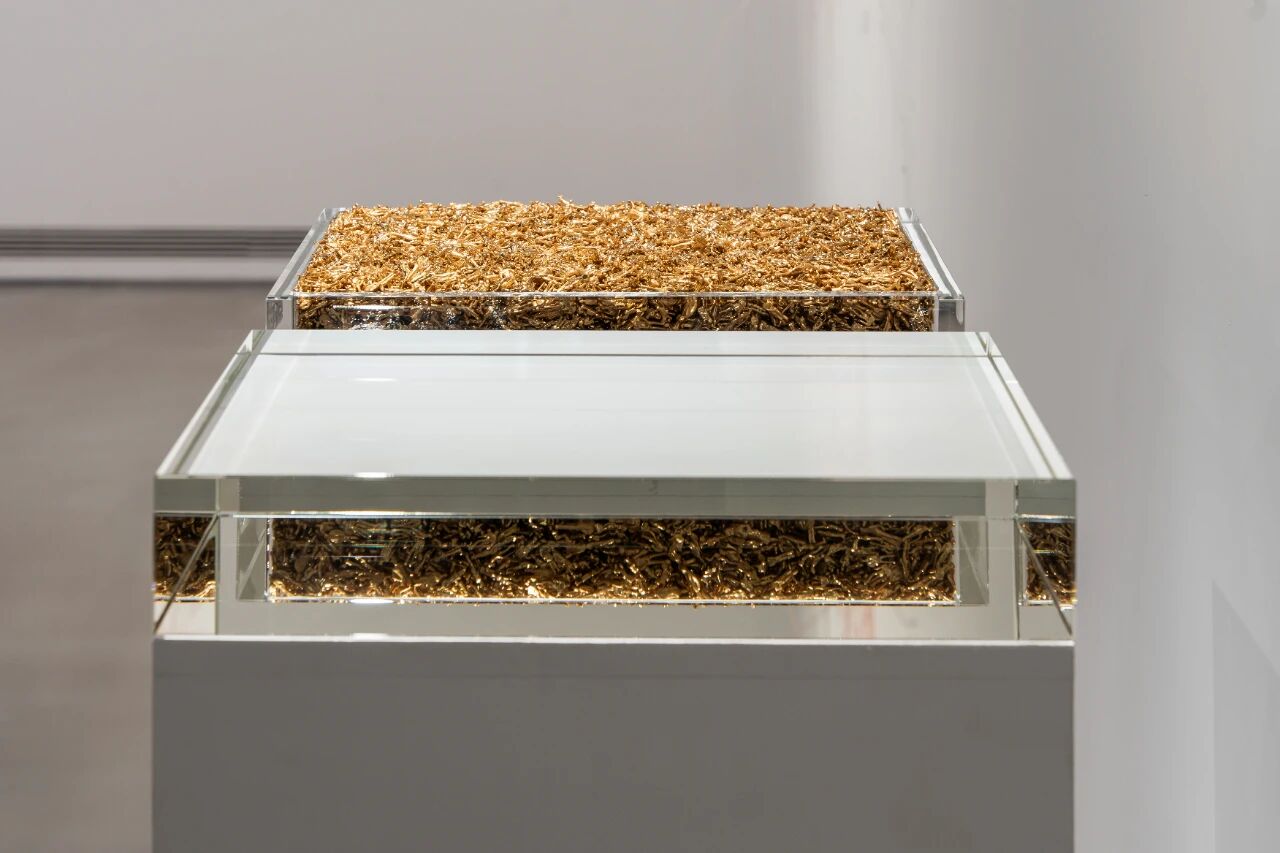
Lin Tianmiao endows abstract concepts with material form. The first work visitors encounter upon entering Yi Art Museum's exhibition hall, “Raised Patterns”, embeds words related to women in different languages into wool carpets through weaving techniques. The viewer's body becomes involved in a subtle interplay of reading, treading, and avoiding. Words do not appear as linguistic units, but rather as relics or echoes entangled within the threads. Her “Crystal Block” series turns toward a state of solidification, where body parts, tools, and abstract objects become visual fragments within transparent blocks, silently revealing the tension between time and matter. “Net” wraps colorful thread around industrial wire mesh, transforming rigid material into a warm texture; “Viewing Shadow” and “Focus” series pierce canvas with cotton thread, constructing three-dimensional imprints on two-dimensional surfaces.
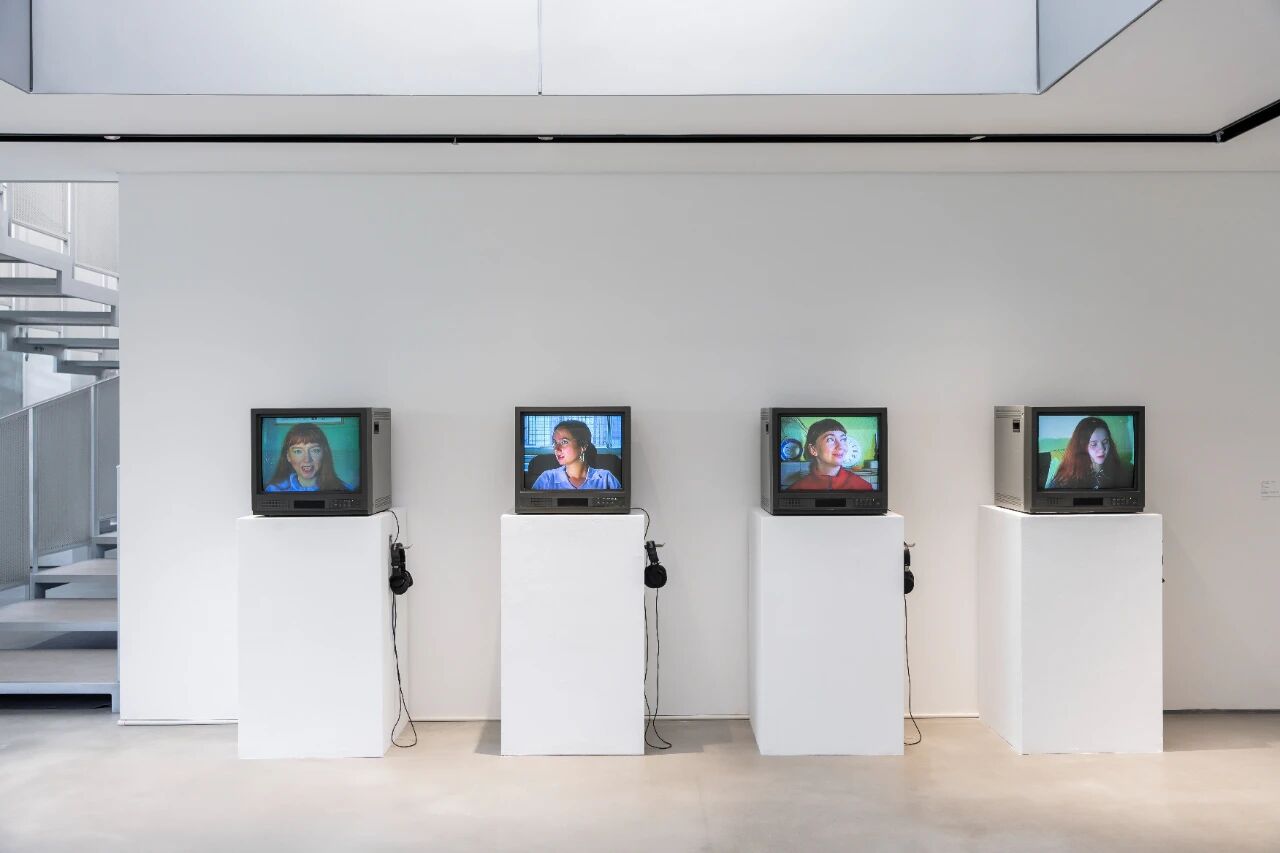
As a pioneering figure in the field of contemporary sound art, Susan Philipsz has forged a unique creative path since the 1990s. In 2010, Philipsz won the Turner Prize, becoming the first artist to receive the award for sound art, marking widespread recognition of this medium within contemporary art. Using intangible sound as her material, she creates powerful emotional and spatial experiences: from whispered singing in supermarket broadcasts to ghostly chants under bridge arches, to horn echoes resonating through museum halls, guiding viewers to reacquaint themselves with space, memory, and their own perception through hearing.
Susan Philipsz was born in Glasgow in 1965. She studied sculpture at Duncan of Jordanstone College of Art, University of Dundee in 1993, and received her Master's degree from the University of Ulster in Belfast in 1994. Initially creating sculptural works, she later shifted toward sound installations. Her sound works primarily consist of recordings of herself singing unaccompanied songs, which are then played through broadcast systems in galleries or other public spaces, exploring the potential of combining sculpture and sound to heighten audience engagement with their surroundings while stimulating profound introspection.
Although Philipsz has no formal vocal training, most of her works feature her own singing. She neither follows musical scores nor composes music; this untrained quality of her voice is a crucial characteristic of her work. In a 2010 interview with The Guardian, she stated: "Everyone can identify with the human voice. I think hearing a song unaccompanied, even an untrained voice, can trigger some strong memories and associations. If I'd studied at music school, I wouldn't be making the work I do today."
“Metropola” (1997) represents an early implementation of this approach. She played pop songs she sang unaccompanied through a supermarket's public address system in Manchester, filling the everyday shopping space with intimate, ethereal vocals. Unsuspecting customers seemed to accidentally overhear someone humming; some looked around, trying to locate the source, while others paused to listen, moved by this unexpected sonic intervention. Listeners' perception of their surroundings was reactivated, sound acting like an invisible sculpture, "carving" emotional shapes in the air.
“Seven Tears” (2016), a large-scale acoustic installation, continues the artist's long-term exploration of the sensory, emotional, and architectural tensions that sound awakens within specific spaces. The work is based on the 1604 composition “Lachrimae, or Seaven Teares” by English composer John Dowland—a suite of pieces themed around the "falling tear" motif, permeated with plaintive emotion.
Beginning with fiber and sound wave, the exhibition lays out a layered, intersecting, and fluid perceptual structure between matter and sensation. As viewers enter the gallery, the space does not unfold linearly, but rather feels like entering a continuously generative field of sound and fabric, where vision and hearing are juxtaposed, pathways and emotions intertwine, and individual perceptual experience gradually unfolds.
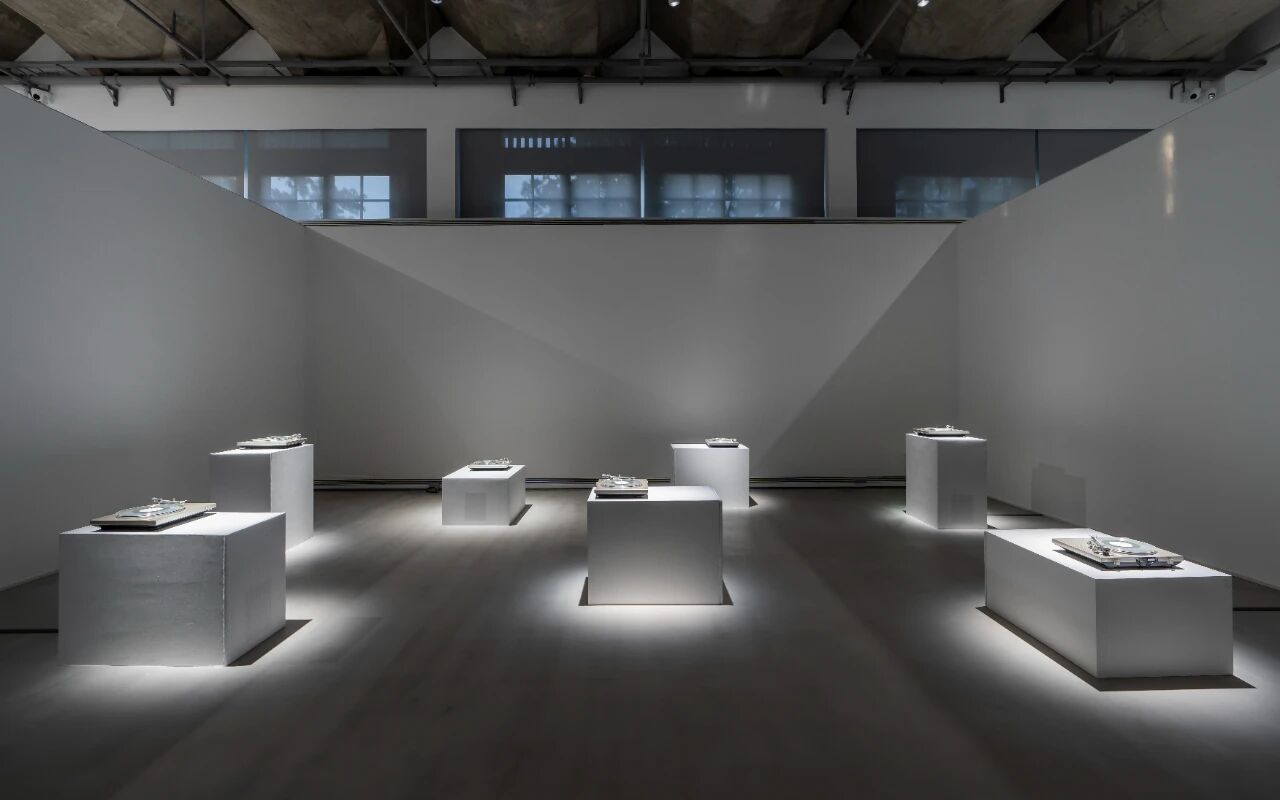
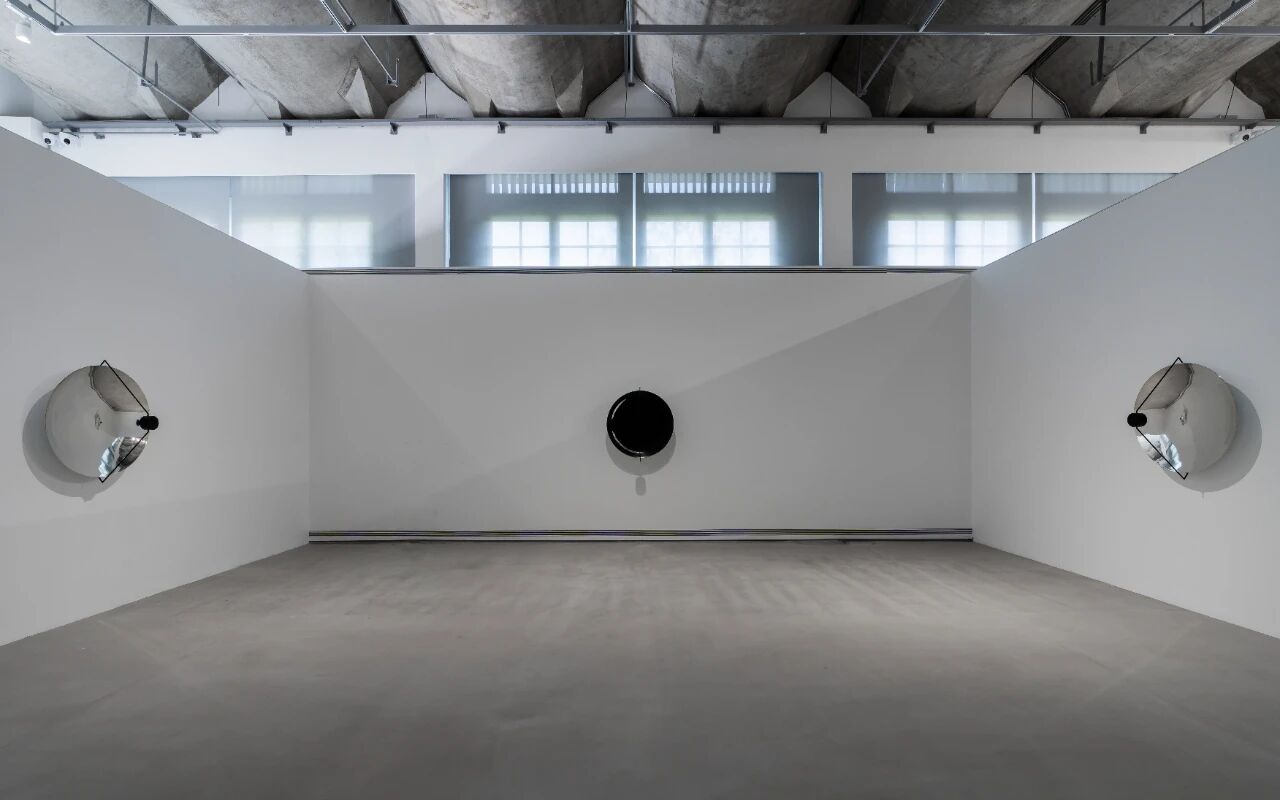
Susan Philipsz's works construct spatial experience along sonic pathways. “Seven Tears” generates a sonic structure through the contact of glass cups, water quantity, and fingers, dismantling the melody into seven repeated yet non-coinciding fragments. They cycle continuously within the gallery, no longer a linear unfolding of music, but transforming into an auditory environment of frequency, rhythm, and reverberation. In “Sound Mirror”, the trajectory of sound is given directionality again; the audience's hearing is no longer passively received , but guided, circulated, and concentrated within space, forming a variably dense sensory focus.
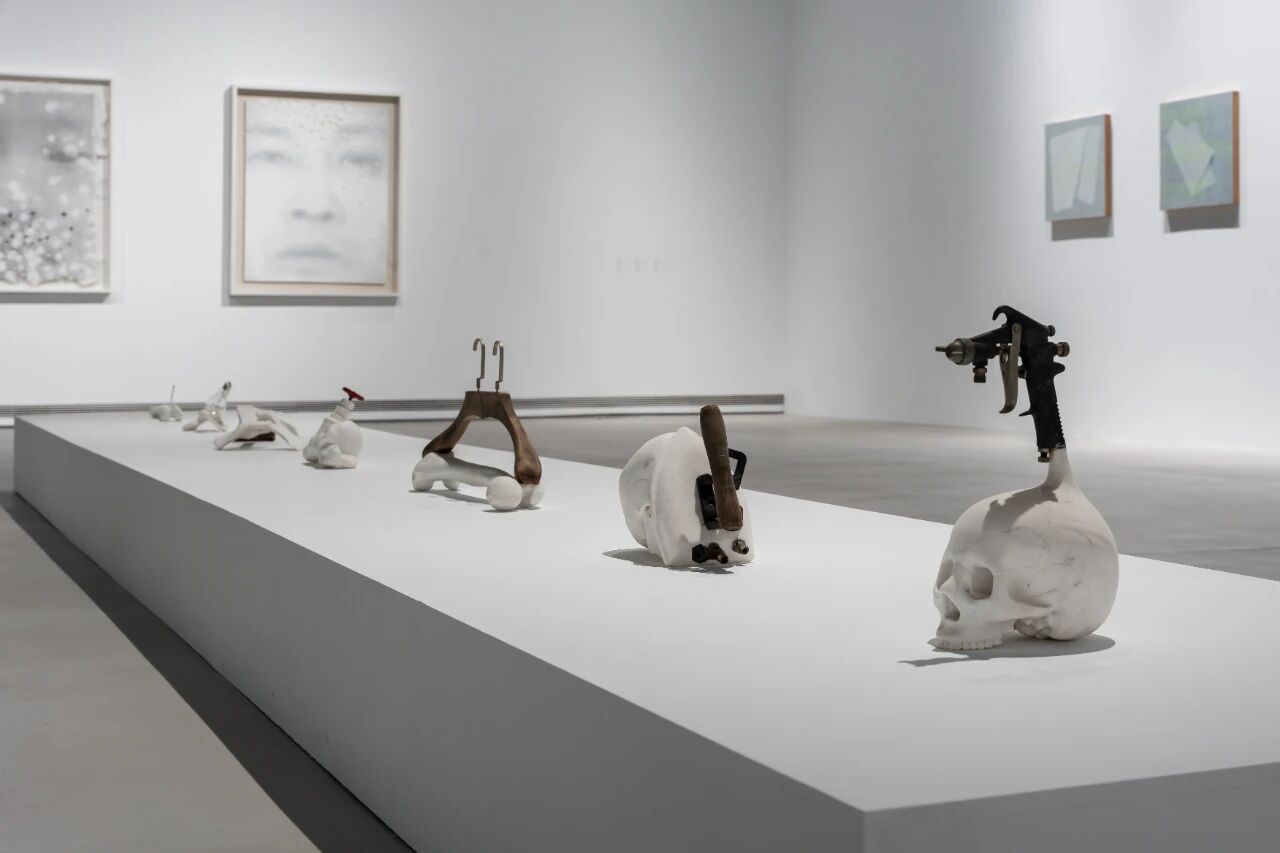
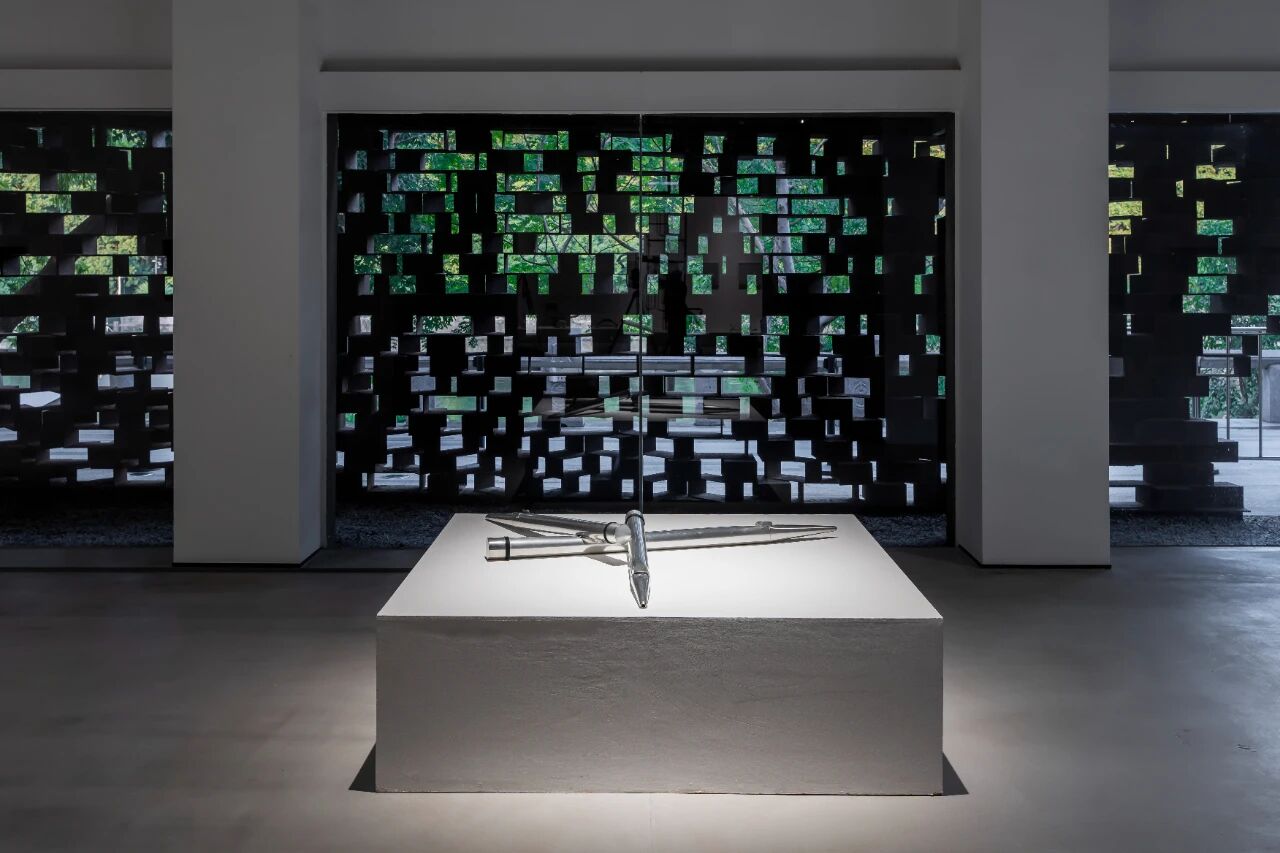
Deep within the exhibition, Lin Tianmiao's “Marble Tools” and Philipsz's Broken Ensemble form a cross-media counterpoint. The former carves everyday objects from white marble, creating a cool fracture between form and function; the latter, through fragmented organ soundtracks, evokes deep listening to the lingering echoes of war. This counterpoint makes "absence" not only the exhibition's theme but also the starting point for viewing: those unvoiced histories, those unnamed entities, are here re-stitched by thread and sound wave.
At the “Weaving Sound:Echoes in the Absence” exhibition in Yi Art Museum, Susan Philipsz's sound installations and Lin Tianmiao's fiber structures intertwine: threads seem like solidified soundtracks, sound waves transform into flowing sculpture. Walking through, the viewer's breath, footsteps, and memories quietly interweave. Those seemingly absent histories and emotions have not truly departed—they are reverberating once more between our eardrums and memories, in the form of echoes.
Artist Lin Tianmiao studied at the Fine Arts Department of Capital Normal University in her early years, and in 1984 went to New York's School of Visual Arts for advanced study, experiencing firsthand the wave of feminist art in the United States in the late 1980s. During her time in America, Lin worked for eight years as a fabric designer, immersing herself completely in a rich artistic atmosphere and frequently visiting art exhibitions to accumulate creative energy. It was not until 1995, when she returned to China with her husband Wang Gongxin, that she began her artistic career.
After returning to China with her husband in 1995, Lin Tianmiao started her artistic practice. However, having just given birth, the heavy burden of domestic work placed enormous psychological pressure on her. She transformed her life experiences into installation artworks, expressing the emotions generated through her daily existence. Her renowned work “The Spreading of Winding”—featuring a hollowed-out mattress into which she inserted 20,000 large needles, each connected by white cotton thread to white cotton balls—exemplifies this approach. A monitor placed within the pillow repeatedly plays footage of her hands working continuously. The work was inspired by the artist's childhood memories of helping her mother wind yarn. She selects the most inconspicuous, ordinary materials from daily life, internalizing repetitive labor into an instinctive, direct form of expression.
The winding and weaving series established Lin Tianmiao's characteristic approach of creating work from a personal perspective that reflects upon life experiences through emotional expression. Subsequently, the thematic focus of emotion in her various series has continued to deepen around her personal life experiences. As Lin's life circumstances evolved, the emotional expression in her installation works developed further. Particularly during the period when her husband was hospitalized, Lin Tianmiao, as a wife, shouldered the responsibilities of their family, bearing immense psychological pressure. During this time, her installations no longer emphasized women's domestic activities, nor even gender itself. The materials she employed expanded beyond cotton thread and white cloth to include colorful embroidery, wool carpets, and eventually metal materials, hair, and fibers.
Lin Tianmiao endows abstract concepts with material form. The first work visitors encounter upon entering Yi Art Museum's exhibition hall, “Raised Patterns”, embeds words related to women in different languages into wool carpets through weaving techniques. The viewer's body becomes involved in a subtle interplay of reading, treading, and avoiding. Words do not appear as linguistic units, but rather as relics or echoes entangled within the threads. Her “Crystal Block” series turns toward a state of solidification, where body parts, tools, and abstract objects become visual fragments within transparent blocks, silently revealing the tension between time and matter. “Net” wraps colorful thread around industrial wire mesh, transforming rigid material into a warm texture; “Viewing Shadow” and “Focus” series pierce canvas with cotton thread, constructing three-dimensional imprints on two-dimensional surfaces.
As a pioneering figure in the field of contemporary sound art, Susan Philipsz has forged a unique creative path since the 1990s. In 2010, Philipsz won the Turner Prize, becoming the first artist to receive the award for sound art, marking widespread recognition of this medium within contemporary art. Using intangible sound as her material, she creates powerful emotional and spatial experiences: from whispered singing in supermarket broadcasts to ghostly chants under bridge arches, to horn echoes resonating through museum halls, guiding viewers to reacquaint themselves with space, memory, and their own perception through hearing.
Susan Philipsz was born in Glasgow in 1965. She studied sculpture at Duncan of Jordanstone College of Art, University of Dundee in 1993, and received her Master's degree from the University of Ulster in Belfast in 1994. Initially creating sculptural works, she later shifted toward sound installations. Her sound works primarily consist of recordings of herself singing unaccompanied songs, which are then played through broadcast systems in galleries or other public spaces, exploring the potential of combining sculpture and sound to heighten audience engagement with their surroundings while stimulating profound introspection.
Although Philipsz has no formal vocal training, most of her works feature her own singing. She neither follows musical scores nor composes music; this untrained quality of her voice is a crucial characteristic of her work. In a 2010 interview with The Guardian, she stated: "Everyone can identify with the human voice. I think hearing a song unaccompanied, even an untrained voice, can trigger some strong memories and associations. If I'd studied at music school, I wouldn't be making the work I do today."
“Metropola” (1997) represents an early implementation of this approach. She played pop songs she sang unaccompanied through a supermarket's public address system in Manchester, filling the everyday shopping space with intimate, ethereal vocals. Unsuspecting customers seemed to accidentally overhear someone humming; some looked around, trying to locate the source, while others paused to listen, moved by this unexpected sonic intervention. Listeners' perception of their surroundings was reactivated, sound acting like an invisible sculpture, "carving" emotional shapes in the air.
“Seven Tears” (2016), a large-scale acoustic installation, continues the artist's long-term exploration of the sensory, emotional, and architectural tensions that sound awakens within specific spaces. The work is based on the 1604 composition “Lachrimae, or Seaven Teares” by English composer John Dowland—a suite of pieces themed around the "falling tear" motif, permeated with plaintive emotion.
Beginning with fiber and sound wave, the exhibition lays out a layered, intersecting, and fluid perceptual structure between matter and sensation. As viewers enter the gallery, the space does not unfold linearly, but rather feels like entering a continuously generative field of sound and fabric, where vision and hearing are juxtaposed, pathways and emotions intertwine, and individual perceptual experience gradually unfolds.
Susan Philipsz's works construct spatial experience along sonic pathways. “Seven Tears” generates a sonic structure through the contact of glass cups, water quantity, and fingers, dismantling the melody into seven repeated yet non-coinciding fragments. They cycle continuously within the gallery, no longer a linear unfolding of music, but transforming into an auditory environment of frequency, rhythm, and reverberation. In “Sound Mirror”, the trajectory of sound is given directionality again; the audience's hearing is no longer passively received , but guided, circulated, and concentrated within space, forming a variably dense sensory focus.
Deep within the exhibition, Lin Tianmiao's “Marble Tools” and Philipsz's Broken Ensemble form a cross-media counterpoint. The former carves everyday objects from white marble, creating a cool fracture between form and function; the latter, through fragmented organ soundtracks, evokes deep listening to the lingering echoes of war. This counterpoint makes "absence" not only the exhibition's theme but also the starting point for viewing: those unvoiced histories, those unnamed entities, are here re-stitched by thread and sound wave.
At the “Weaving Sound:Echoes in the Absence” exhibition in Yi Art Museum, Susan Philipsz's sound installations and Lin Tianmiao's fiber structures intertwine: threads seem like solidified soundtracks, sound waves transform into flowing sculpture. Walking through, the viewer's breath, footsteps, and memories quietly interweave. Those seemingly absent histories and emotions have not truly departed—they are reverberating once more between our eardrums and memories, in the form of echoes.