






圣歌
Canticum
2024
2024|瓷器、实银、铝、木与Artglass展示柜
Porcelain, silver, aluminium, wood and Artglass vitrines
整体 99 × 105.5 × 13.7 cm
Porcelain, silver, aluminium, wood and Artglass vitrines
整体 99 × 105.5 × 13.7 cm
艺术家Artist
埃德蒙·德瓦尔 Edmund de Waal
埃德蒙·德瓦尔 Edmund de Waal
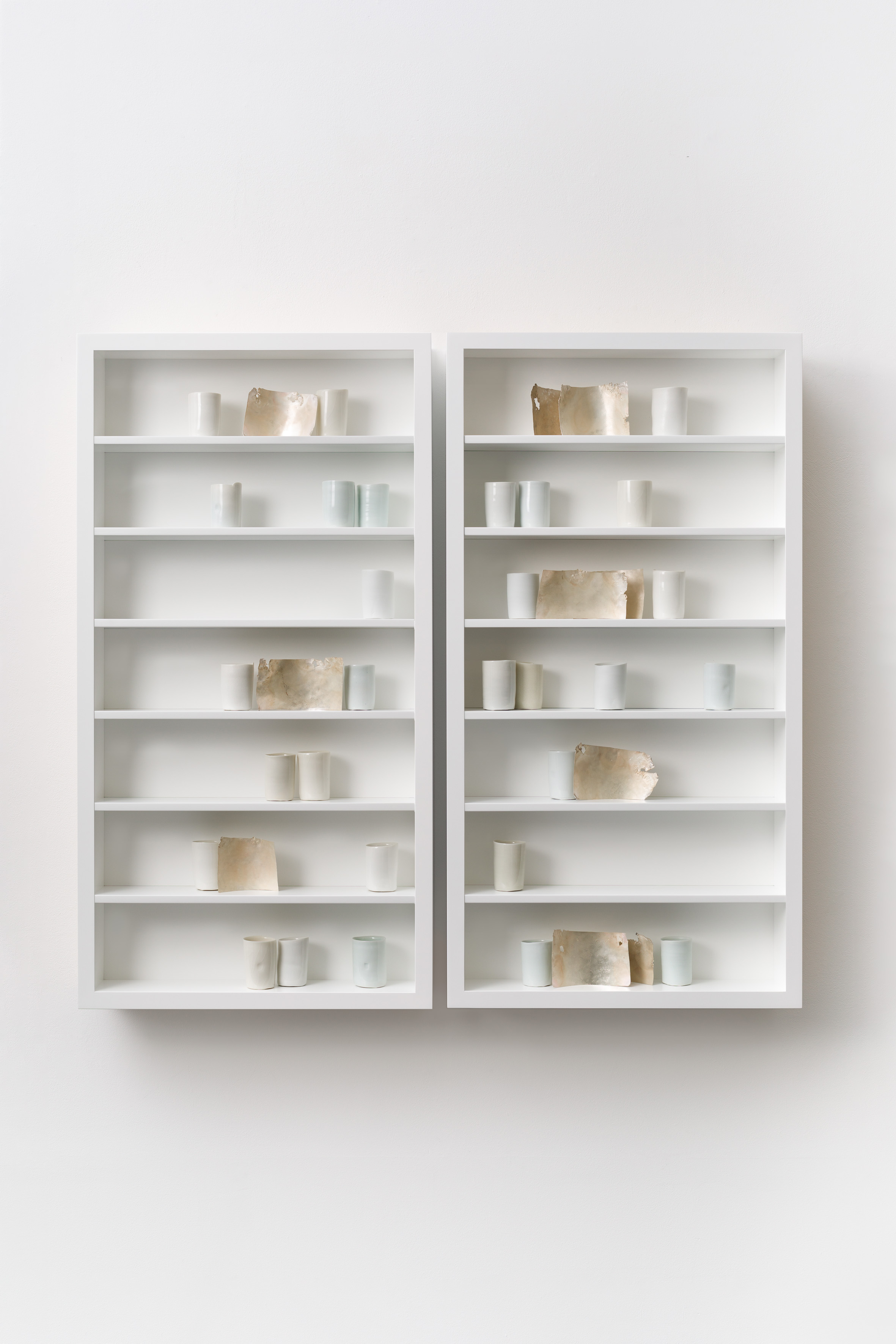
《圣歌》由29件白瓷与10件弯曲的银质器皿组成,整齐排列于双联玻璃橱柜中。作品标题“Canticum”(意为“圣歌”)暗示了节奏与仪式感——这些器皿如音符般排列,形成一种静默的诗性韵律。德瓦尔以“容器”为叙事媒介,通过重复与秩序探索“如何安放记忆”。在他看来,瓷器的脆弱与光泽象征了人类经验的易碎与延续,而银与玻璃的反光则折射出时间的流动与观看的复杂性。《圣歌》延续了艺术家一贯的“物之诗学”,在极简的空间中注入深沉的人文情感,让器皿之间的呼吸与空白化为无声的祈祷。
Canticum (2024) comprises 29 porcelain vessels and 10 curved silver forms housed within paired vitrines. The title, meaning “hymn,” evokes rhythm and devotion. Arranged with meticulous precision, the vessels resemble a silent score—each line and gap a measure of breath. De Waal uses repetition and containment to contemplate how memory is held. Porcelain’s fragility and translucence mirror human vulnerability, while silver and glass reflect time and perception. Continuing his “poetics of objects,” Canticum transforms stillness into resonance, where silence itself becomes a sacred language.
Canticum (2024) comprises 29 porcelain vessels and 10 curved silver forms housed within paired vitrines. The title, meaning “hymn,” evokes rhythm and devotion. Arranged with meticulous precision, the vessels resemble a silent score—each line and gap a measure of breath. De Waal uses repetition and containment to contemplate how memory is held. Porcelain’s fragility and translucence mirror human vulnerability, while silver and glass reflect time and perception. Continuing his “poetics of objects,” Canticum transforms stillness into resonance, where silence itself becomes a sacred language.